
Hyaluronic acid.
A sugar molecule found in the body that binds water. As a cross-linked gel it serves as a filler for volume and contours; in soft form as a skin booster for hydration.
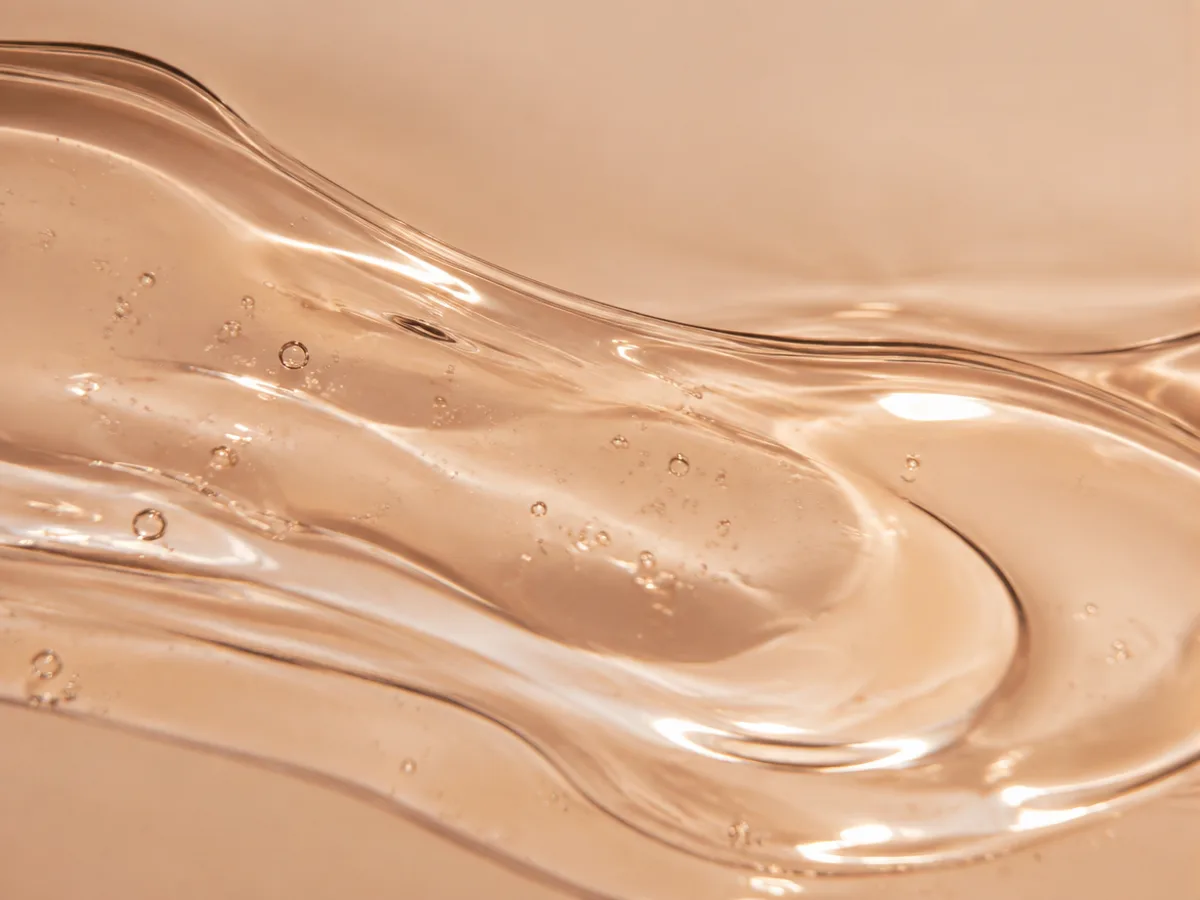
Hyaluronic acid in the lexicon: what it does in the body, how fillers are made from it, differences between products, durability, reversibility and risks.
A closer look.
Hyaluronic acid (hyaluronan) is a polysaccharide found in skin, joints and connective tissue, where it binds up to a thousand times its weight in water. With age the amount in the skin declines – it becomes drier and loses firmness. For aesthetic medicine, hyaluronic acid is produced biotechnologically, not from animal tissue.
As a filler it is chemically cross-linked so that it is not broken down within days. The degree of cross-linking determines firmness and durability: firm gels for chin, cheeks and jawline, soft ones for lips, tear trough and fine lines. Non-cross-linked or lightly cross-linked hyaluronic acid is introduced across the skin as a skin booster.
The great advantage over other fillers: hyaluronic acid can be dissolved within hours with the enzyme hyaluronidase. Depending on the area it lasts six to eighteen months. Risks are swelling, bruising, nodules and – very rarely – a vascular occlusion, which must be treated immediately.
This lexicon entry is general information and does not replace the medical consultation required under German law (§ 630e BGB).
At a glance.
A question about Hyaluronic acid? Send us a short WhatsApp message – we usually reply the same working day.
Ask via WhatsAppFrequently asked questions.
Is hyaluronic acid the same as Botox?
No. Hyaluronic acid gives volume and smooths lines at rest; botulinum toxin relaxes muscles and works on expression lines.
Are all hyaluronic acid fillers the same?
No. They differ in cross-linking, firmness, added local anaesthetic and licensing. The choice depends on area and goal.
Can the body reject hyaluronic acid?
Allergies are very rare because the molecule is identical to the body's own. Reactions usually concern additives or the injection itself.
Sources and further reading.
- NHS: Dermal fillers – patient information
- MPDG – German medical devices act (fillers are medical devices)
- BfArM – Federal Institute for Drugs and Medical Devices
- DGPRÄC – German Society of Plastic, Reconstructive and Aesthetic Surgeons
- § 630e BGB – duty to inform before treatment (German Civil Code)
- DGBT – German Society for Aesthetic Botulinum Toxin Therapy
- AWMF – German clinical practice guidelines
External links open in a new window; their operators are responsible for their content. Medical responsibility for this page: Katayoun Mostaghimi, specialist in general medicine. Last updated: 2026-10-05.
Related pages.
Talk to the physician.
Book on DoctolibOr simply call: +49 1520 8367711 · info@vivaderm.de
Or start with a consultation only: consultation appointment (€50, credited against a treatment)